For years I assumed one heavy coat would get me through any hunt. It doesn't. Sit still for hours on a high seat during a driven hunt and the cold gets into your bones, but stalk for twenty minutes and you're soaked in sweat even when it's barely above freezing. No single garment handles both. A system you can adjust does.
The layering system
Three layers, each with one job.
The base layer (merino wool or synthetic, never cotton) moves moisture away from your skin. Cotton holds onto sweat and then holds onto cold right along with it — exactly what you don't want on a chilly morning in the seat.
The insulating layer traps warmth. Fleece or a light down vest both work, and the point is you can strip it off the moment you start moving and put it back on the moment you stop.
The outer shell keeps out wind and rain. It doesn't need to be warm on its own — that's the layer underneath doing its job. A thin, breathable shell you can add or shed as conditions change beats one heavy winter coat you wear all day regardless of what you're actually doing.
Noise matters more in some situations than others
On a high seat, or during a driven hunt, it barely matters if your jacket rustles a little — you're sitting still and the game is coming to you. Stalking in close is different. Fabric noise is your biggest enemy there. Stiff, synthetic material that catches on branches or crackles with every step gives you away faster than a shift in the wind. Soft, quiet fabric — fleece-like material, or shells specifically woven to move silently — is often the difference between a shot and a roe deer that's already gone before you've raised your rifle.
Camouflage: match the terrain, not the shop display
A bark pattern that disappears you into dense woodland stands out badly in an open field — too much contrast, not enough match with what's actually around you. On farmland or open agricultural ground, muted, low-contrast patterns that echo stubble, dirt, and low crops work better. In autumn woodland, you want that broken brown structure back. Look at what's actually around you that day, not at whichever pattern looks toughest on the hanger.
Visibility: check what your hunt requires
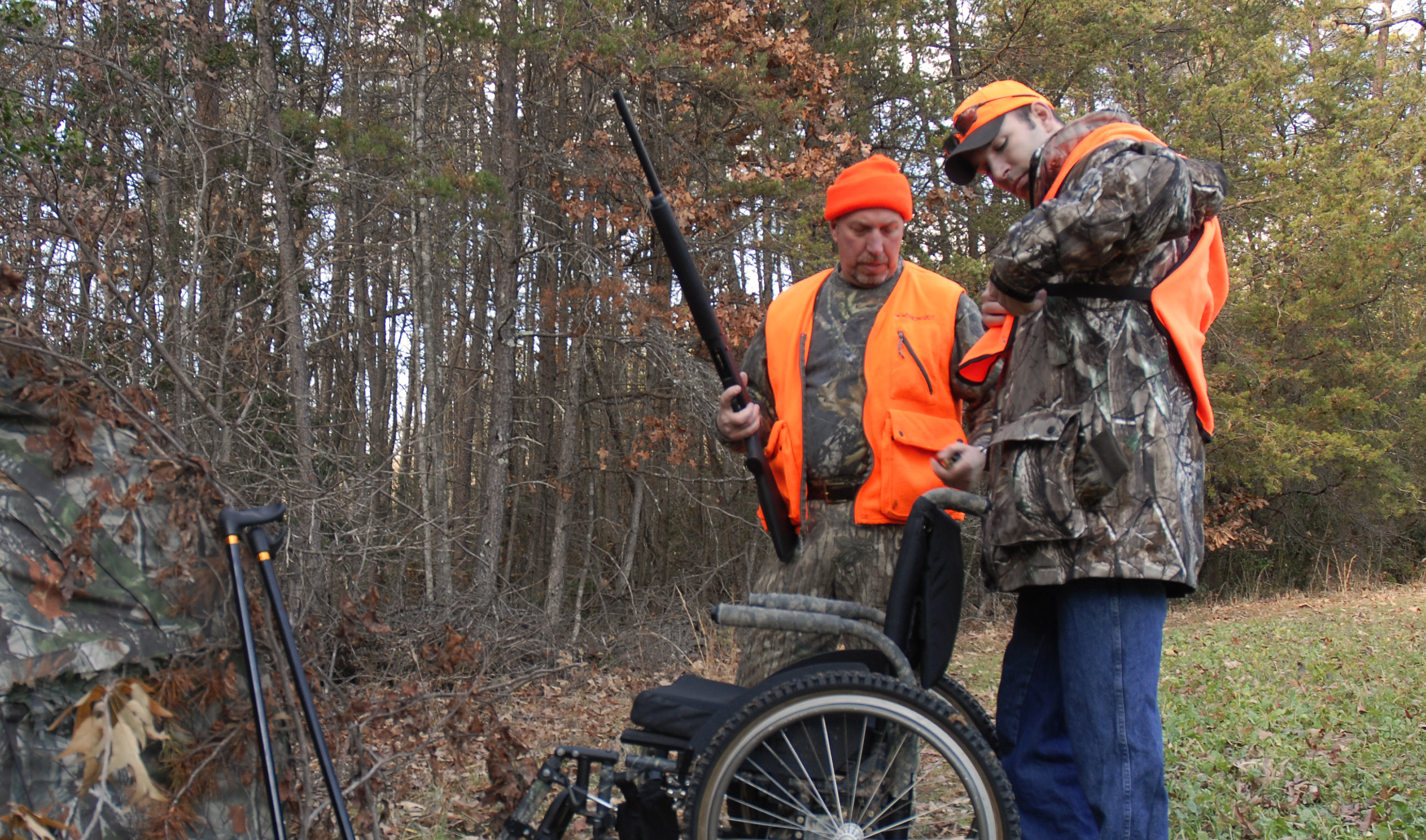
Some driven hunts, and some countries, require a blaze-orange element — a vest, cap, or armband, mainly so you're not mistaken for game moving through cover. The rules vary by country and by hunt type, so this isn't something I can generalize here. Check with the organizer or your local hunting association beforehand and just wear it — it costs you nothing in terms of quiet or camouflage during a driven hunt, and it avoids a lot of trouble.
The real takeaway: build your kit around the kind of hunt you're doing that day, not around one outfit that has to be good enough for everything.
Photo: U.S. Marine Corps (MCB Quantico), via Wikimedia Commons (public domain)