This is the question I get asked more than any other: which dog should I get? Most of the time the answer isn't the breed people expect, because it doesn't start with the breed — it starts with how you actually hunt.
Are you mostly on the water, waiting on duck and goose? Walking stubble fields and heather after pheasant? Working dense cover for small game? Or out on a driven hunt where game is pushed toward the line? That matters more than a breed name on a breeder's website.
Retrievers: built for the water
Labrador-type breeds were developed to retrieve, and it shows. They're built to go into the water and bring back downed birds, even in bad weather and over real distance. What stands out to me is the temperament: calm enough to sit still in a blind for hours, driven enough to move the moment the shot falls.
This is the dog for someone who hunts duck or goose regularly, on open water or along a marsh edge. They work fine in the field too, but retrieving — especially out of water — is where they're strongest.
Pointers and setters: the fieldwork
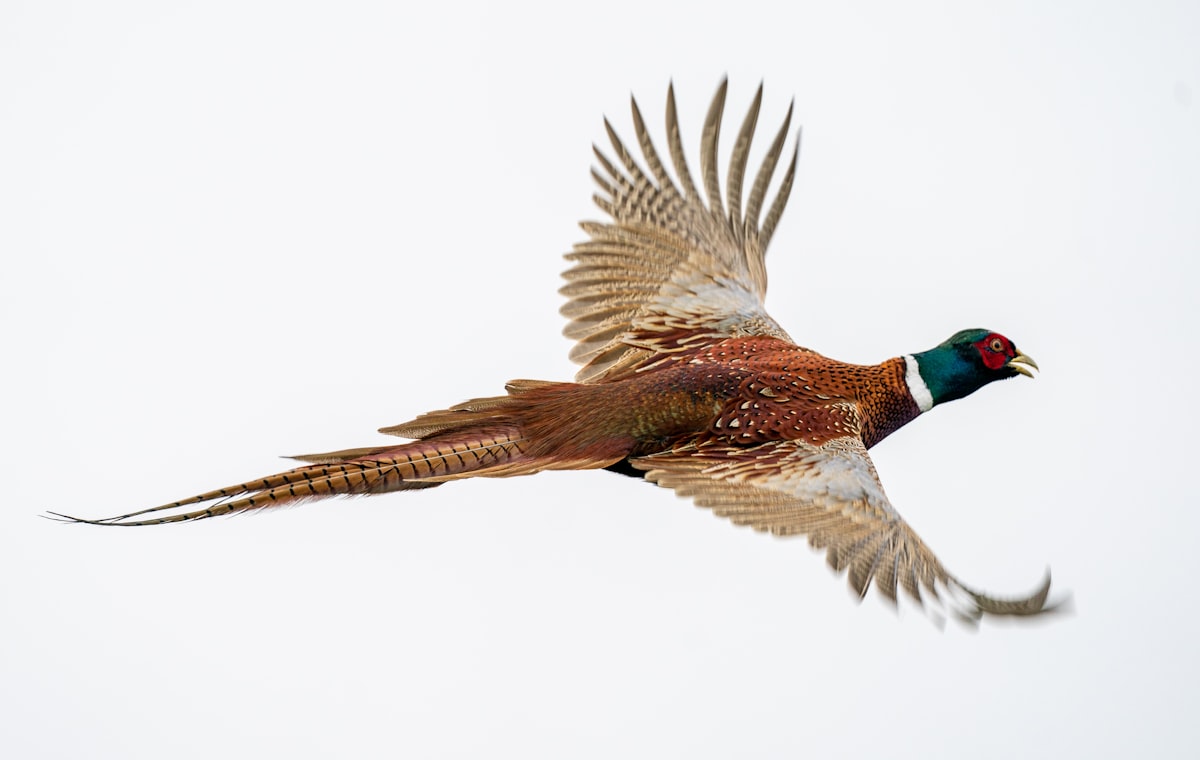
These are the dogs that find game and hold it for you before the flush. A pointer locked up on pheasant is one of the better things to watch in the field — the dog freezes, you close the distance, and only then does anything happen.
They're built for range and open ground: crop fields, heath, wide terrain where a dog can work well ahead of you. If your hunt is about covering ground and searching, with the shot as the payoff of teamwork between dog and gun, this is your type.
Spaniels: working the cover
Where a pointer holds still, a spaniel keeps moving. They're bred to stay close and actively work dense cover — brush, reeds, the rough edges of a field — until game flushes within range of your gun.
This is smaller-scale, more intensive work. Less the wide-open range of a pointer, more the tight, methodical quartering of a patch of ground. A lot of hunters working small groups on small game, in mixed terrain, end up with a spaniel.
Terriers and dachshund-type breeds: going to ground
Historically bred for work other types don't do: following fox or badger into the den. Short-legged, built to fit narrow tunnels, with the persistence that work demands.
Less relevant if you're mainly hunting big game or birds, but for anyone dealing specifically with fox or badger, this is a different kind of hunting work than everything else on this list.
Hounds: the driven hunt
A driven hunt is about getting game moving and pushing it toward the line. Hounds and related trailing breeds are built for exactly that: stamina, a nose that can hold a scent trail, and the drive to stay on it without getting pulled off by distractions.
This is group work. One hound rarely covers the whole picture — usually a pack works together to move a larger stretch of ground.
The breed is the starting point, not the answer
Here's the honest part. A pup from a good hunting line is a starting point, not a guarantee. Without consistent training from an early age, none of the breeds on this list will become what you actually need in the field. That's not a weekend course — it's years of repetition and time in the field.
And the match has to work both ways. A pointer with a hunter who only occasionally works small terrain will get bored. A retriever with someone who never gets near water never does the job it was built for. Look honestly at how often you hunt, where, and how much training time you're willing to put in — that decides more than the breed on paper.
Photo: Canarian, via Wikimedia Commons (CC BY-SA 4.0)